How do we build a website today?
Building a website is faster than ever today, partly thanks to AI. So the difference between a good site and a mediocre one no longer lies in the hours that go into it, but in the choices made beforehand. That’s where we focus most of our attention.
1. The marketing intake
You sit down with a digital marketing consultant who has been working with SEO for more than ten years. Together we set out:
- who the site is for and what those visitors should do;
- the structure: which pages, in what order, and which questions they answer;
- the copy: what you say and how, so that both Google and AI assistants such as ChatGPT understand what you do;
- the measurement: what counts as success, and how we track it.
It works. Our own online shop Rule Zero got 542 visitors via AI assistants in four months, and they were the most engaged visitors of any channel.
2. The design
You show us a few websites you like. Based on those and on the intake, we create a custom design. AI tools help us get to a first design faster, but the result is unique. We don’t build sites with that typical AI look you see everywhere.
3. Building
Then you choose the route that suits you.
Two routes
Custom WordPress
The classic route: a CMS that lets you manage pages, news and products yourself, on a custom design. On top of that we can build custom features: configurators, calculators, integrations with your CRM or ERP, B2B pricing, members’ areas.
A WordPress site does need maintenance, though: updates to WordPress and the plugins, security, backups. We take care of that. Your website then runs on our own servers, is monitored and stays secure and GDPR-compliant.
Choose WordPress if you want to change a lot yourself, want an online shop, or need features that call for a CMS.
Static website
The new route: a website made up of fast, ready-made pages. There’s no database behind it and there are no plugins to update. That has big advantages:
- Almost no maintenance. No updates, no maintenance contract. That saves costs, year after year.
- Secure. Where there’s no database or login, there’s little to hack.
- Lightning fast. Good for your visitors, for Google and for your ads.
You don’t miss out on anything a good site needs. Forms work with spam protection and land in your inbox or CRM. There’s a cookie banner, a privacy and cookie policy, first-party analytics, structured data for search engines and, if you want, multiple languages.
Want to change some text or add a page? We do that, quickly and without any fuss.
Choose static if your site mainly needs to persuade and bring in enquiries, and you’d rather not think about maintenance. This website was built this way too, by the way.
Online shops
We build online shops in WooCommerce, with what makes an online shop profitable: integrations with your ERP or accounting software, shipping via bpost, FedEx or other carriers, product feeds for Google and Meta, and the right emails at the right moment. What we built in our own online shop Rule Zero, we also put to work for clients.
What’s always included
- Marketing intake, structure and copy.
- Custom, responsive design.
- SEO basics: speed, structure, metadata and structured data.
- Spam protection on forms.
- GDPR: privacy policy, cookie policy and a cookie banner with Consent Mode v2.
- Analytics you own with Matomo (read why).
- Multiple languages if you need them. Most of the sites we build are multilingual.
What we’ve built
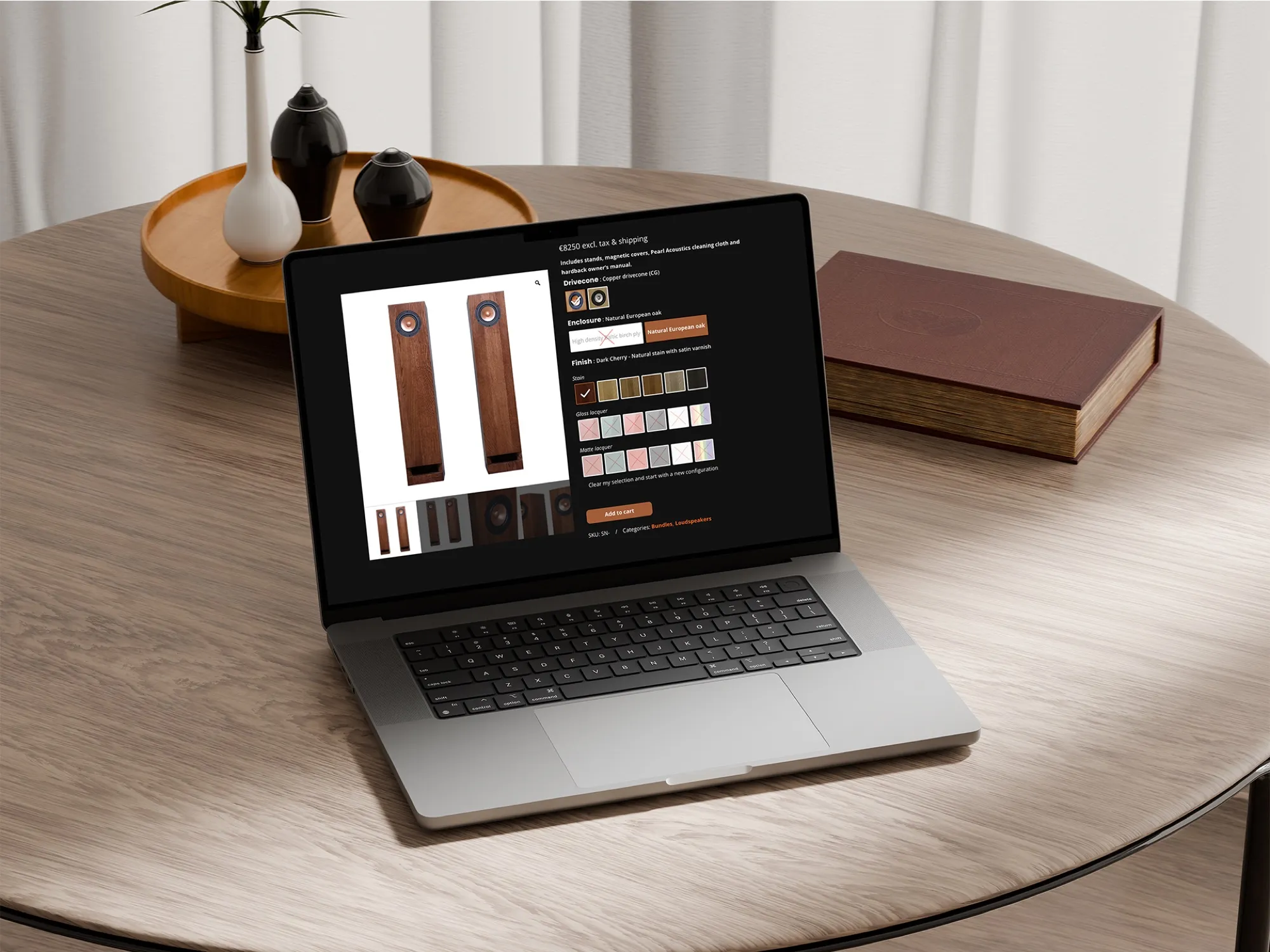
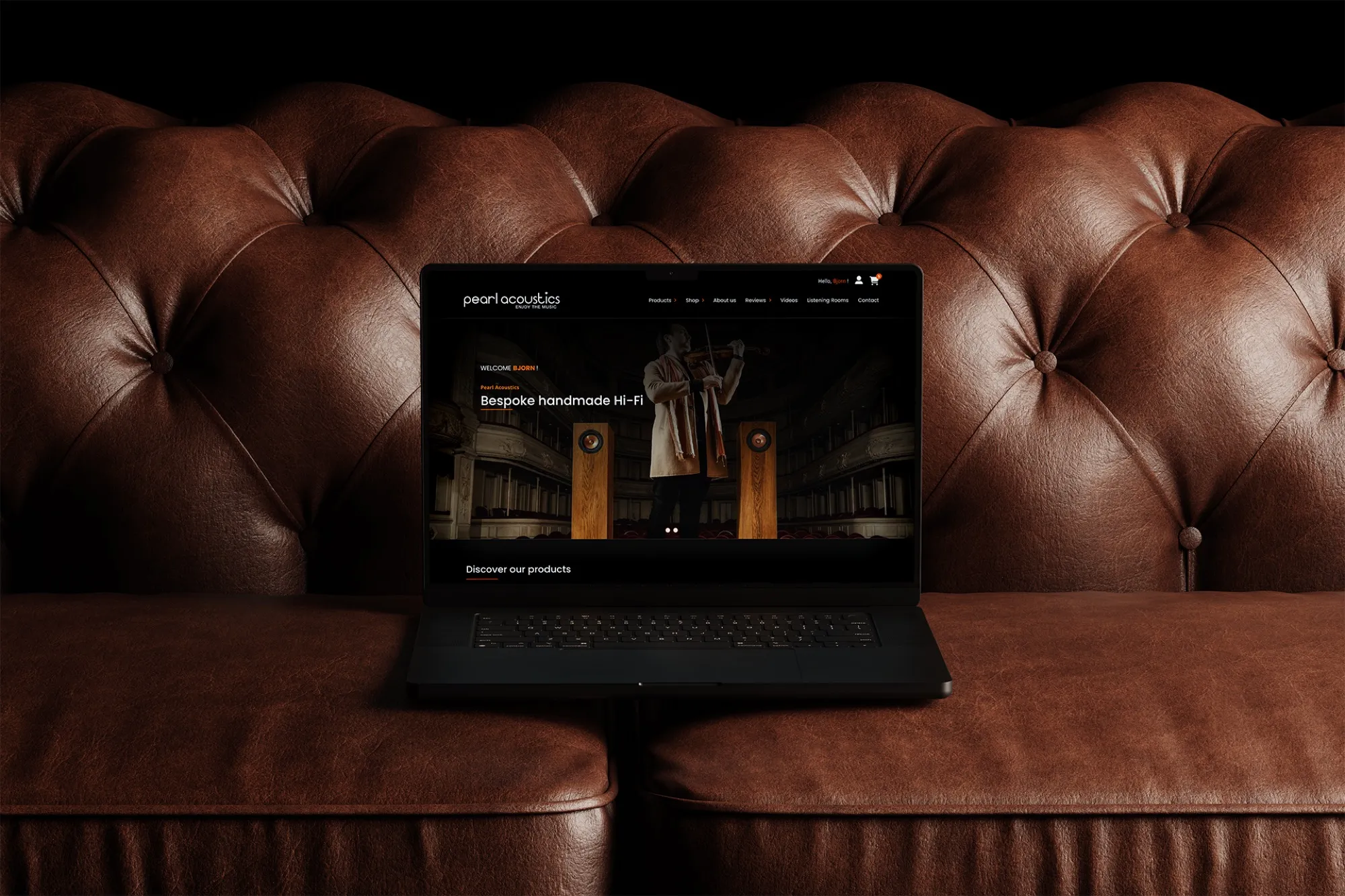
- Pearl Acoustics: a custom international online shop for a Belgian audio brand, with a product configurator, two warehouses (Belgium and the US), euros and dollars, and automated shipping, customs and invoicing flows.
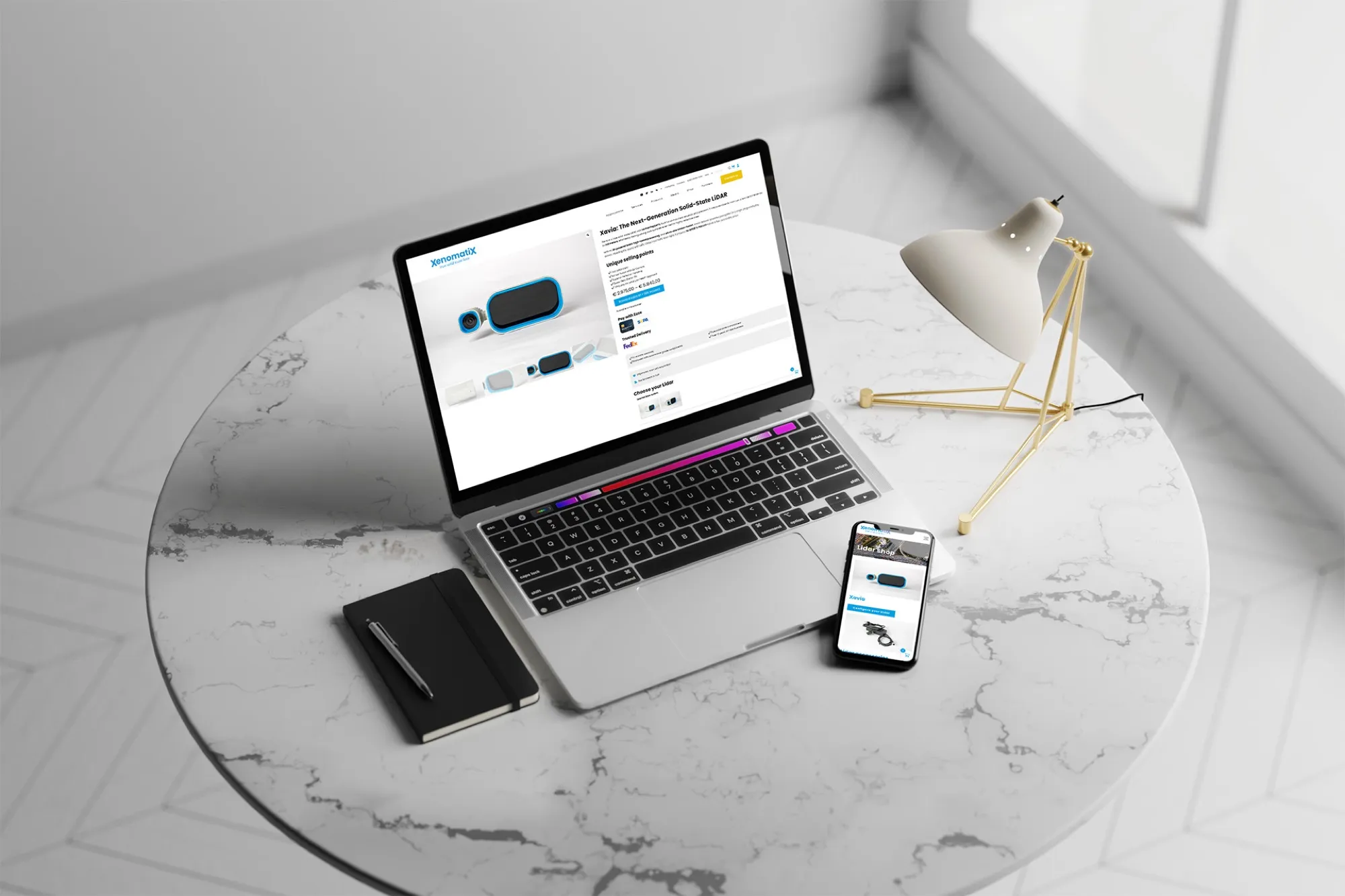
- XenomatiX: a B2B online shop for LiDAR sensors, built into an existing custom website, with FedEx and the correct VAT rules for each EU country.
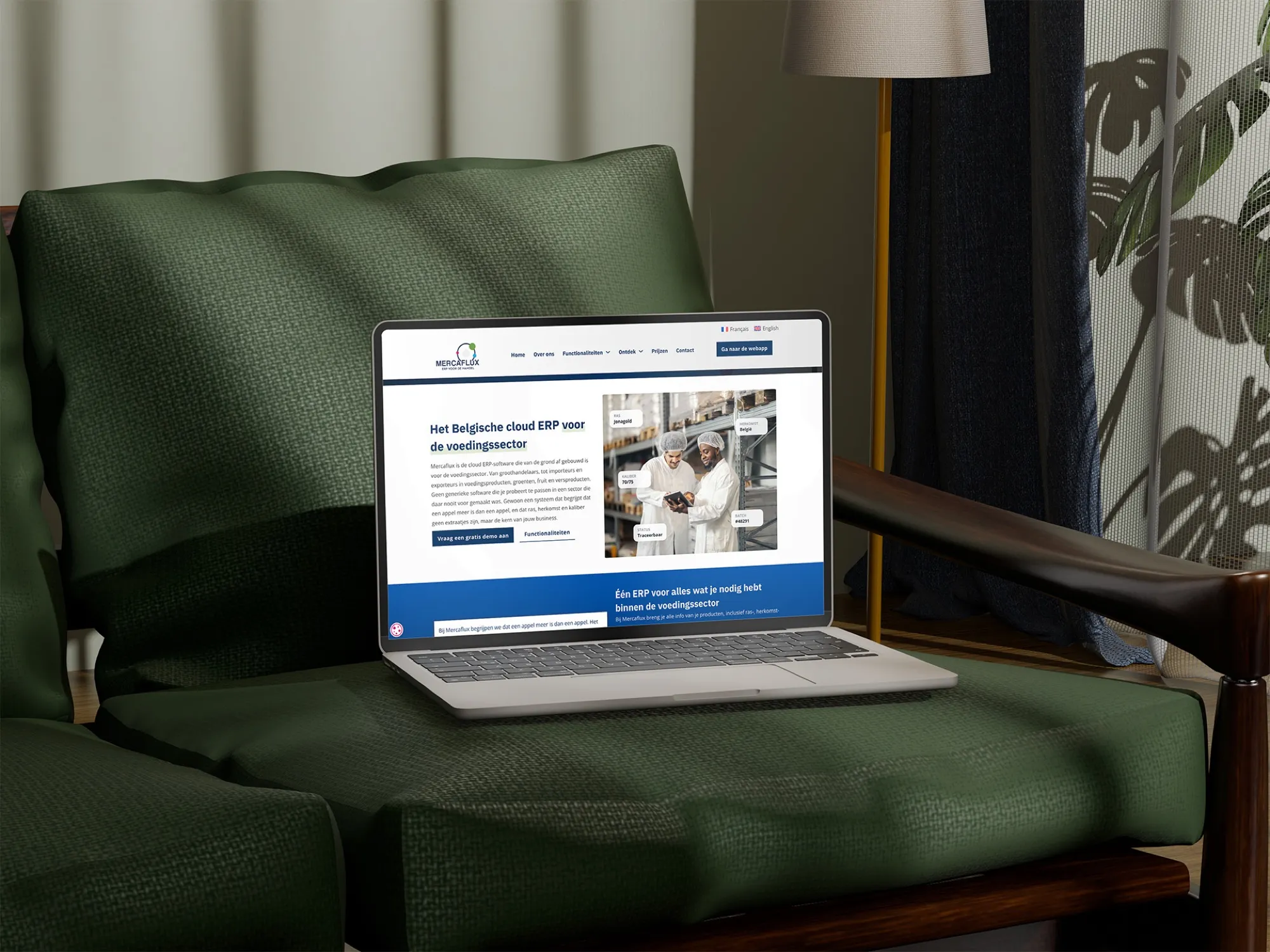
- Mercaflux: the website and the UI/UX design of the app for a cloud ERP in the food sector.
- Spinefitter by SISSEL: a multilingual online shop with business accounts and customer-specific pricing.
- Bierolade: an online shop that took more than 840 orders in its first year.
- Ferranti Boost25: an event website, developed from Ferranti’s own design.
- IO Biotech and VICO Therapeutics: corporate websites for biotech companies, with the security that listed companies require.
How we start
- Introductory call with Bjorn: what do you need, and which route fits?
- Marketing intake and proposal.
- Design based on your examples and the intake.
- Build, test and launch, with measurement from day one.
- After that: maintenance (WordPress) or changes on request (static), and if you want, further support with your marketing.